



Part One - What Are Experts Saying About the Future of Work? An AGA Roundtable

Back to the blog

Photo blogue partie 1

  • Financial education is a tool that plan sponsors can use to support their employees, according to Russell Investments

  • Workers need to plan for retirement while keeping a cool head in the face of economic turmoil, says TD Asset Management Inc.

Because we’re Stronger Together–one of our corporate values–AGA recently held a roundtable discussion with leaders from Russell Investments, TD Asset Management Inc., Korn Ferry and TELUS Health. I was able to dig deeper with them on important trends influencing the future of work and share the expected impact on plan sponsors tasked with designing benefits that meet these new realities.

Below is the first part of the summary of this roundtable discussion, covering two topics: financial resilience and risk management by workers planning for retirement. You will be able to read the second part (which deals with the impact of artificial intelligence on organizations and workers, and mental health) in our next article.

The Erosion of Financial Resilience

Despite policy headwinds, the Canadian economy showed resilience in 2025, with GDP growth exceeding 1%. Stock markets, fueled by optimism around artificial intelligence and technology, reached record highs, lifting retirement and investment account values.

Yet, economic volatility continues to shape consumer behavior. Tariffs and inflationary pressures are straining household budgets, while 40% of Canadians report experiencing constant mental and financial stress. Sixty-five percent of working Canadians have reduced spending due to financial uncertainty, rising to 75% among Gen Z1. Alarmingly, 28% have reduced or paused saving altogether to cover basic expenses1—a trend reflected in the national household savings rate, which declined from 5.9% in 2024 to 4.7% in 2025.

Thirty percent of Canadian workers have no emergency savings, rising to 43% among Gen Z—a clear sign of eroding financial resilience. Without this safety net, millions remain one unexpected expense away from crisis, making long-term financial planning nearly impossible. Economic stress, in turn, depresses engagement and productivity.

Plan sponsors now play a vital role in helping workers build both financial and emotional resilience. Organizations that expand financial wellness programs—offering tools, not just education—will stand out as employers of choice. Supporting financial literacy, budgeting, and long-term investment planning can help employees weather economic turbulence and regain a sense of control.

BeiChen Lin Canadian investors, including those investing towards their retirement, would be well served by staying disciplined, and developing a long-term, diversified strategic investment plan that can help their portfolios be more resilient against near-term bumps.BeiChen Lin,  Senior Investment Strategist & Head of Canadian Strategy, Russell Investments

Taking Less Risk = Taking More Risk?

Recent labor market data still show slackening conditions: in October 2025, there were 3.3 unemployed people per job vacancy1. If weaker job creation or layoffs interrupt contributions, capital accumulation would slow down, and “time in market” would get shortened right when compounding matters most.

Volatility also changes behavior in ways that can delay retirement. When expected returns feel less reliable with increased volatility, people often de-risk into cash-like instruments, leaving return on the table. Canada has a clear post-pandemic example of this “cash parking”. High retail cash deposit and GIC balances and fast growth of Canadian money market mutual fund (assets grew ~180% since 2019)2 are all consistent with households leaning into cash yields during uncertain periods. The consequence is clear: lower equity exposure and lower contributions mean less capital at retirement, which pushes more people to work longer. Observed retirement timing already drifted later. Canada’s average retirement age has already increased and labor force participation rate for age 65 years and older moved up more than 2% over the past 10 years3.


On the upside, sustained growth pressure could accelerate policy and business responses, removing internal bottlenecks (productivity, housing, capital and labor flow) and nudging faster resolution of trade frictions. The same volatility that currently delays retirement could trigger reforms, improving medium-term growth and retirement outcomes. Haining Zha,  CFA, Vice President & Director, Asset Allocation Research, TD Asset Management Inc.    Haining_Zha_portrait

Want to Know More?

This roundtable discussion was part of the content of AGA's first Innovate to Lead report, in which we present the major trends for 2026 in group insurance, pension and savings plans, and human resources for Canadian plan sponsors. This report, which aims to share the knowledge and observations of the AGA team, can be obtained by clicking this link.

Thanks to our collaborators:

RUSSELL INVESTMENTS is a leading global investment solutions partner providing a wide range of investment capabilities to institutional investors, financial intermediaries, and individual investors around the world. Since 1936, Russell Investments has been building a legacy of continuous innovation to deliver exceptional value to clients, working every day to improve people’s financial security.

TD GLOBAL INVESTMENT SOLUTIONS (TDGIS) represents the institutional asset management businesses of TD Bank Group – TD Asset Management Inc. (TDAM) and Epoch Investment Partners, Inc. (TD Epoch). TDGIS brings together three decades of investment experience and has a long track record of helping clients meet their investment goals. Our broad selection of strategies and solutions includes fundamental equities, fundamental free cash flow driven equities, quantitative and passive equities, fixed income across the credit quality spectrum and alternatives, such as private credit, infrastructure and real estate. We offer investment solutions to corporations, pension plans, endowments and foundations, insurance companies, sovereign wealth funds, and superannuation, among others. Both entities are affiliates and are wholly-owned subsidiaries of The Toronto-Dominion Bank.


1 TELUS Mental Health Index, December 2025

2 Statistics Canada, Payroll employment, earnings and hours, and job vacancies, October 2025

3 Bank of Canada, An update on the Canadian money market mutual fund sector, October 2025

4 International Labor Organization, LSEG data

Part One - What Are Experts Saying About the Future of Work? An AGA Roundtable

Photo blogue partie 1

  • Financial education is a tool that plan sponsors can use to support their employees, according to Russell Investments

  • Workers need to plan for retirement while keeping a cool head in the face of economic turmoil, says TD Asset Management Inc.

Because we’re Stronger Together–one of our corporate values–AGA recently held a roundtable discussion with leaders from Russell Investments, TD Asset Management Inc., Korn Ferry and TELUS Health. I was able to dig deeper with them on important trends influencing the future of work and share the expected impact on plan sponsors tasked with designing benefits that meet these new realities.

Below is the first part of the summary of this roundtable discussion, covering two topics: financial resilience and risk management by workers planning for retirement. You will be able to read the second part (which deals with the impact of artificial intelligence on organizations and workers, and mental health) in our next article.

The Erosion of Financial Resilience

Despite policy headwinds, the Canadian economy showed resilience in 2025, with GDP growth exceeding 1%. Stock markets, fueled by optimism around artificial intelligence and technology, reached record highs, lifting retirement and investment account values.

Yet, economic volatility continues to shape consumer behavior. Tariffs and inflationary pressures are straining household budgets, while 40% of Canadians report experiencing constant mental and financial stress. Sixty-five percent of working Canadians have reduced spending due to financial uncertainty, rising to 75% among Gen Z1. Alarmingly, 28% have reduced or paused saving altogether to cover basic expenses1—a trend reflected in the national household savings rate, which declined from 5.9% in 2024 to 4.7% in 2025.

Thirty percent of Canadian workers have no emergency savings, rising to 43% among Gen Z—a clear sign of eroding financial resilience. Without this safety net, millions remain one unexpected expense away from crisis, making long-term financial planning nearly impossible. Economic stress, in turn, depresses engagement and productivity.

Plan sponsors now play a vital role in helping workers build both financial and emotional resilience. Organizations that expand financial wellness programs—offering tools, not just education—will stand out as employers of choice. Supporting financial literacy, budgeting, and long-term investment planning can help employees weather economic turbulence and regain a sense of control.

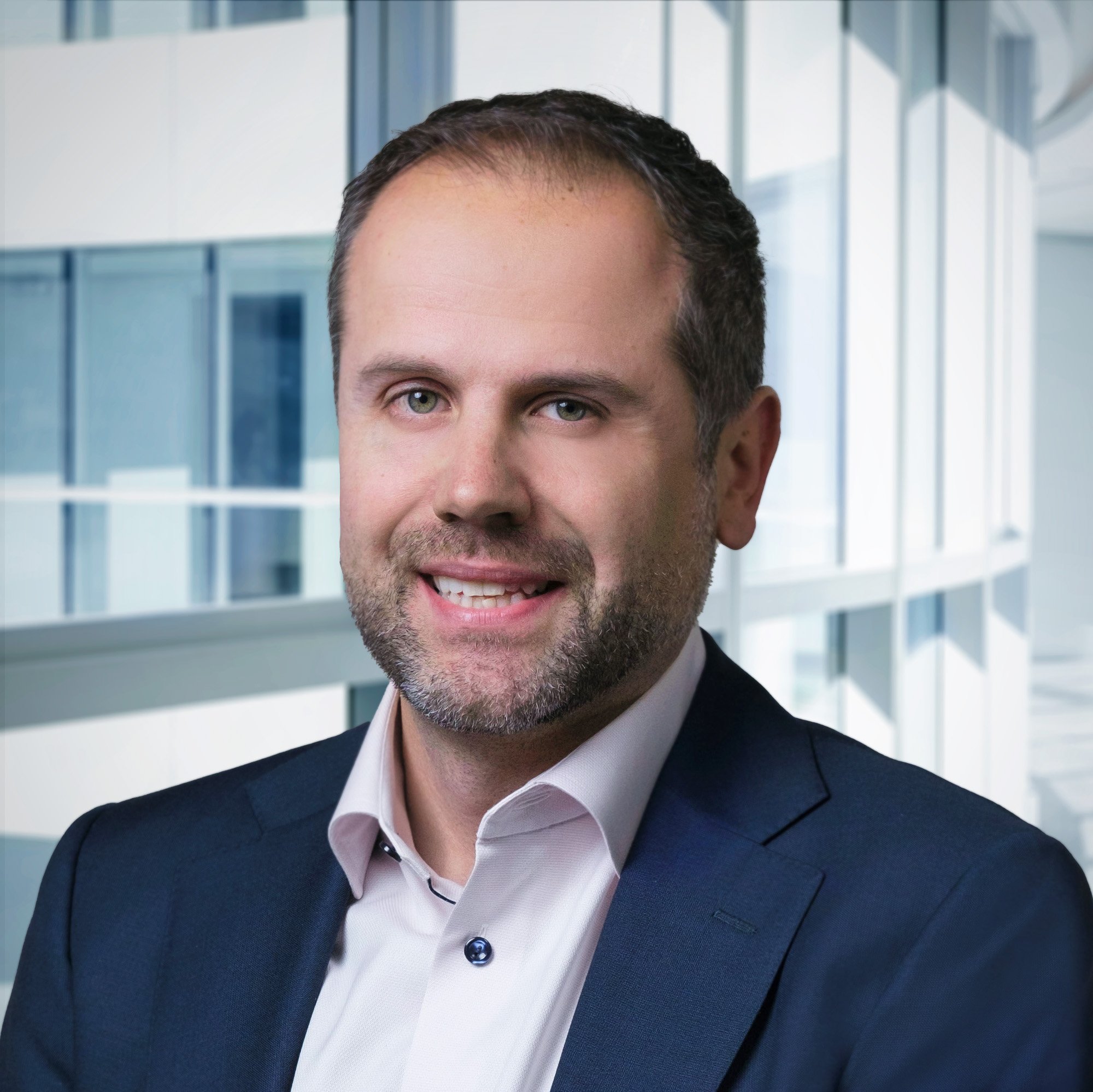
BeiChen Lin Canadian investors, including those investing towards their retirement, would be well served by staying disciplined, and developing a long-term, diversified strategic investment plan that can help their portfolios be more resilient against near-term bumps.BeiChen Lin,  Senior Investment Strategist & Head of Canadian Strategy, Russell Investments

Taking Less Risk = Taking More Risk?

Recent labor market data still show slackening conditions: in October 2025, there were 3.3 unemployed people per job vacancy1. If weaker job creation or layoffs interrupt contributions, capital accumulation would slow down, and “time in market” would get shortened right when compounding matters most.

Volatility also changes behavior in ways that can delay retirement. When expected returns feel less reliable with increased volatility, people often de-risk into cash-like instruments, leaving return on the table. Canada has a clear post-pandemic example of this “cash parking”. High retail cash deposit and GIC balances and fast growth of Canadian money market mutual fund (assets grew ~180% since 2019)2 are all consistent with households leaning into cash yields during uncertain periods. The consequence is clear: lower equity exposure and lower contributions mean less capital at retirement, which pushes more people to work longer. Observed retirement timing already drifted later. Canada’s average retirement age has already increased and labor force participation rate for age 65 years and older moved up more than 2% over the past 10 years3.


On the upside, sustained growth pressure could accelerate policy and business responses, removing internal bottlenecks (productivity, housing, capital and labor flow) and nudging faster resolution of trade frictions. The same volatility that currently delays retirement could trigger reforms, improving medium-term growth and retirement outcomes. Haining Zha,  CFA, Vice President & Director, Asset Allocation Research, TD Asset Management Inc.    Haining_Zha_portrait

Want to Know More?

This roundtable discussion was part of the content of AGA's first Innovate to Lead report, in which we present the major trends for 2026 in group insurance, pension and savings plans, and human resources for Canadian plan sponsors. This report, which aims to share the knowledge and observations of the AGA team, can be obtained by clicking this link.

Thanks to our collaborators:

RUSSELL INVESTMENTS is a leading global investment solutions partner providing a wide range of investment capabilities to institutional investors, financial intermediaries, and individual investors around the world. Since 1936, Russell Investments has been building a legacy of continuous innovation to deliver exceptional value to clients, working every day to improve people’s financial security.

TD GLOBAL INVESTMENT SOLUTIONS (TDGIS) represents the institutional asset management businesses of TD Bank Group – TD Asset Management Inc. (TDAM) and Epoch Investment Partners, Inc. (TD Epoch). TDGIS brings together three decades of investment experience and has a long track record of helping clients meet their investment goals. Our broad selection of strategies and solutions includes fundamental equities, fundamental free cash flow driven equities, quantitative and passive equities, fixed income across the credit quality spectrum and alternatives, such as private credit, infrastructure and real estate. We offer investment solutions to corporations, pension plans, endowments and foundations, insurance companies, sovereign wealth funds, and superannuation, among others. Both entities are affiliates and are wholly-owned subsidiaries of The Toronto-Dominion Bank.


1 TELUS Mental Health Index, December 2025

2 Statistics Canada, Payroll employment, earnings and hours, and job vacancies, October 2025

3 Bank of Canada, An update on the Canadian money market mutual fund sector, October 2025

4 International Labor Organization, LSEG data